Iceland's Ring Road in 7 Days: Honest Driving Tips and Daily Routes
How much driving is too much, where to actually stop, and the small towns most blogs skip — based on a clockwise loop in early September.

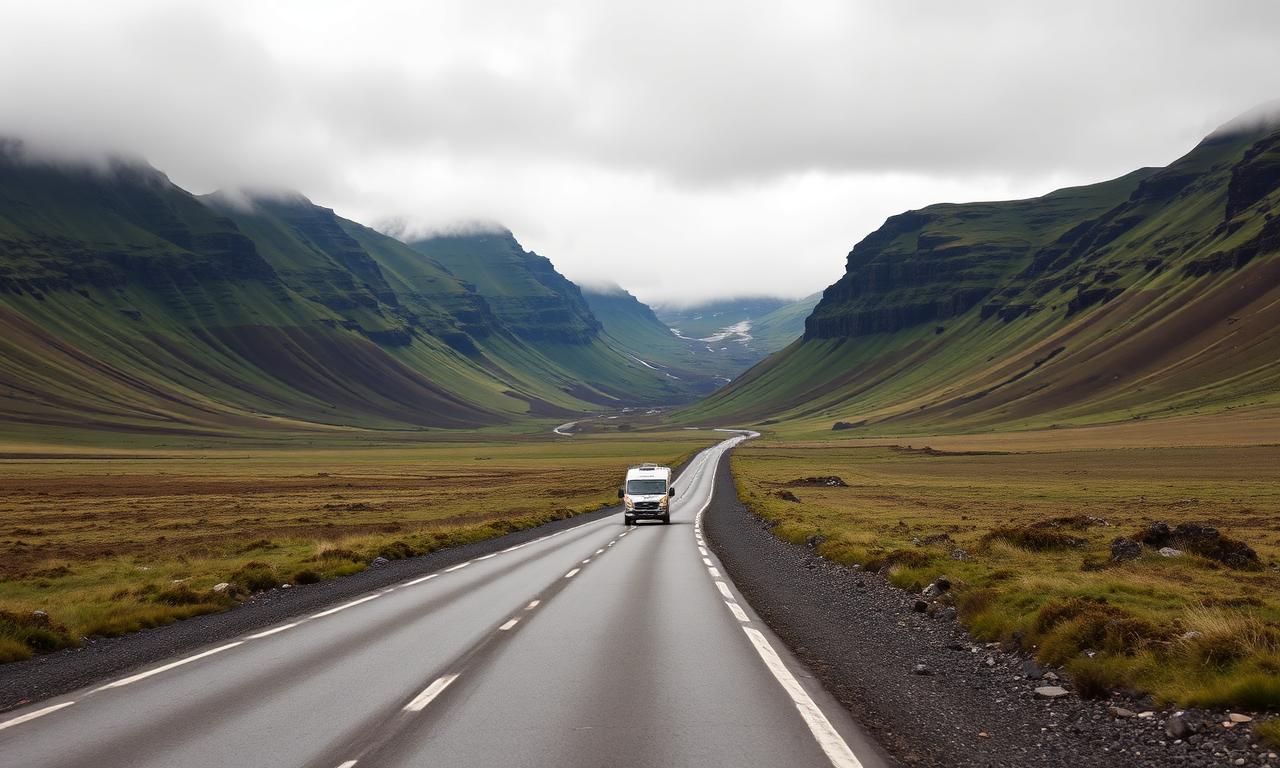
Iceland's Route 1, known locally as the Hringvegur or Ring Road, is a 1,332-kilometer paved loop around the country. In theory you can drive it in three days. In practice, doing it in less than a week means you spend the whole trip looking at the road instead of the country.
Seven days is the sweet spot for a first Ring Road trip. You'll have time to see the main highlights, take one or two side roads, and still have a few unhurried mornings.
§Car Rental and Driving Reality Check
You do not need a 4x4 for the Ring Road itself. The entire loop is paved. You only need a 4x4 if you plan to drive any F-roads into the highlands — and those are closed most of the year anyway. A small 2WD will save you about 40% on rental costs.
Get the gravel-and-sand-and-ash insurance package. Yes, it sounds like a scam. It's not. Volcanic dust storms in the south can pit your paint and cost you thousands. The €10/day add-on is worth it.
Speed limits are 90 km/h on paved rural roads and they are enforced by camera. Slow down for single-lane bridges. Never stop in the middle of the road for a photo — pull fully into a marked rest area.
§A Day-by-Day Route (Clockwise from Reykjavik)
Day 1 — Reykjavik to Vik. Hit the Golden Circle on the way (Thingvellir, Geysir, Gullfoss), then continue south to Seljalandsfoss and Skogafoss. Sleep in Vik or nearby. About 380 km but with stops it fills the whole day.
Day 2 — Vik to Hofn via Skaftafell and the Jokulsarlon glacier lagoon. The lagoon is the single most photographed spot in Iceland and it deserves the hype. Allow at least two hours here.
Day 3 — Hofn to Egilsstadir, through the Eastfjords. Slow, winding road with constant ocean views. Stop in Djupivogur for lunch.
Day 4 — Egilsstadir to Lake Myvatn. Visit Dettifoss on the way — it's the most powerful waterfall in Europe and you can almost always have it to yourself for ten minutes.
Day 5 — Myvatn to Akureyri. Short driving day. Spend the afternoon in the geothermal nature baths, which are about a third the price of the Blue Lagoon and nicer.
Day 6 — Akureyri to the Snaefellsnes Peninsula via the north and west. Long driving day but Snaefellsnes is sometimes called 'Iceland in miniature' for good reason.
Day 7 — Snaefellsnes back to Reykjavik. Short morning drive, afternoon in the city, fly out the next day.
§What I'd Skip
The Blue Lagoon, unless you have a long airport layover. It's expensive, crowded, and the geothermal pools elsewhere in the country are equally beautiful and a fraction of the cost.
Most paid 'tours' to obvious sights. The Ring Road is so well-marked and the parking lots so well-organized that you can do almost everything self-guided. Save the guided tours for glacier walks, ice caves, or anything genuinely technical.
§Who This Guide Is For
If you've been bookmarking everything about this trip and still feel unsure whether it's right for you, this is the gut-check. "Iceland's Ring Road in 7 Days: Honest Driving Tips and Daily Routes" suits curious travelers who'd rather have one perfect, unhurried day than five rushed ones — and who don't mind trading a little comfort for a real sense of place.
You don't need to be ultra-experienced. You don't need a huge budget. What helps most is a flexible attitude, comfortable shoes, and the willingness to ask a local for a tip instead of trusting the first thing a search result tells you. Almost everything below comes from making the small mistakes first, so you don't have to.
If you're traveling with someone else, share this article ahead of time. The trips that go best are the ones where both people show up with roughly the same expectations — the same pace, the same idea of 'enough,' and a shared sense of what 'a good day' actually looks like.
§When To Go and What To Expect
The single biggest factor in how much you enjoy this trip is timing. Shoulder seasons — broadly late spring and early autumn — give you mild weather, smaller crowds, and noticeably better prices on accommodation. Peak summer can be beautiful, but you'll pay a premium and share every viewpoint with a tour group. Winter has its own quiet magic, but check opening hours carefully because smaller places close.
Weather changes the experience more than people expect. A cloudy morning that would feel gloomy at home can turn a cobblestone street into the most photogenic version of itself. Pack a light layer even when the forecast says you won't need one, and accept that one rainy afternoon doesn't ruin a trip — it slows it down in a way you'll later be grateful for.
Crowd patterns matter too. The classic rule still works: arrive at the famous places before 9 a.m. or after 5 p.m., and spend the middle of the day somewhere that locals actually use. You'll see the same icons everyone else sees, just with breathing room around them. The photos you take at off-hours will also be the ones you actually print.
§What To Pack and Prepare
Travel light. Almost every regret on this kind of trip starts with a suitcase that was too big to carry up one flight of stairs. A 40-litre carry-on, a small day bag, and two pairs of shoes (one of them genuinely broken-in for walking) will cover almost everything you actually need.
Bring layers rather than bulky single pieces — a merino tee, a long-sleeve, a light shell, and one warmer mid-layer adapt to almost any forecast. Add a refillable water bottle, a universal adapter, a basic medicine kit (ibuprofen, electrolytes, blister plasters), and a small power bank for long days out. A laundry-detergent sheet pack weighs nothing and saves a full change of clothes.
On the admin side: download offline maps before you leave, screenshot booking confirmations, store a photo of your passport in a separate place, and tell your bank you're traveling. Set up an eSIM the night before departure so you land with working data — it removes the most stressful 30 minutes of any trip and lets you focus on getting your bearings, not on hunting for Wi-Fi.
§A Realistic Budget Breakdown
Budgets are personal, but rough ranges help you plan. A comfortable mid-range version of this trip usually means a small, well-reviewed hotel or apartment, one nice sit-down meal a day, and a couple of paid activities. Expect somewhere between $130 and $220 per person per day in most regions covered here, with major cities on the higher end and rural areas significantly lower.
Budget travelers can comfortably halve that by mixing hostels or guesthouses, cooking simple breakfasts, using public transport, and choosing free walking tours over paid group tours. Luxury travelers can easily double it without trying. None of these versions is 'better' — they're just different trips, and they all photograph the same.
The categories that quietly drain budgets are airport transfers, mid-trip laundry, baggage fees on cheap flights, and snack-spending at tourist sites. Plan for those four in advance and you'll come home much closer to your target number than most travelers do. A loose 10 percent buffer for the surprises is also healthy.
§Common Mistakes To Avoid
The first mistake is overbooking. A schedule with two highlights per day and an open evening almost always feels better than one with five must-sees and no breathing room. Leave space for the small accidental moments — a bakery you wander into, a park bench you sit on for an hour, a street musician who turns out to be unforgettable — because those are usually what you'll actually remember a year later.
The second is over-relying on the same five viral spots everyone else is photographing. They're popular for a reason, but they're rarely the best version of a place. For each famous site on your list, add one less-obvious alternative recommended by someone who actually lives nearby — a neighborhood bakery, a quieter viewpoint, a smaller museum.
The third is forgetting that travel is physically tiring. Hydrate more than you think you need to, get to bed at a reasonable hour at least every other night, and don't be a hero on day three. The best trips are paced like a steady walk, not a sprint. Even seasoned travelers underestimate how much energy a single day of new sights, new food, and new walking patterns burns.
§Frequently Asked Questions
Is it safe for solo travelers? Generally yes, with the same common-sense precautions you'd take in any unfamiliar city — share your itinerary with someone at home, keep an eye on your bag in crowded transit hubs, and trust your instincts about which streets and bars feel right at night.
Do I need to speak the local language? No, but learning even ten polite phrases — hello, please, thank you, sorry, the bill please — changes how people respond to you, and that changes the trip. A translation app handles the rest, and most younger people in tourism roles speak at least some English.
How far in advance should I book? For accommodation in popular places, six to ten weeks ahead is usually the sweet spot. For flights, set price alerts as soon as your dates are firm. For restaurants worth a detour, book the second your dates are confirmed — the best small places fill up first.
Can I do this with kids? Most of it, yes, with slower mornings and earlier dinners. Cut your planned daily activities in half, build in pool or park time, and let each kid choose one thing each day. You'll all enjoy it more, and the photos will be calmer too.
What about travel insurance? Always worth it for anything more than a short domestic weekend. The cheapest plans cover the big stuff — medical, emergency evacuation, trip cancellation — for the price of a couple of restaurant meals.
§Final Thoughts
The version of this trip you'll remember in five years isn't going to be the one with the most checked boxes. It'll be the morning you got up early for no particular reason, the meal that surprised you, the conversation with a stranger that lasted an hour longer than it should have. Plan enough to feel grounded, and leave enough unplanned to be surprised.
If you take one thing from this guide, take this: trust the slower pace. The travelers who come home glowing aren't the ones who saw more — they're the ones who let themselves sink into wherever they were. Save this page, share it with whoever you're traveling with, and come back to it the week before you go.
Mira Halen
Founder & Lead Writer, Wanderlane
Mira is a slow-travel writer who has spent the last decade splitting her year between long, unhurried trips and a small flat in Lisbon. She writes the kind of guides she wishes existed when she first started traveling — honest, friendly, and detailed enough to actually use on the road.
- 10+ years on the road across 48 countries
- Former editor at two indie travel magazines
- Featured in National Geographic Traveler & Afar