Patagonia on a Budget: Hiking the W Trek Independently
How to do Torres del Paine's W Trek without an expensive guided tour — refugio bookings, gear, the route day-by-day, and what it actually costs.

The W Trek in Torres del Paine National Park, in Chilean Patagonia, is one of the great hikes in the world. It's also wrapped in a layer of marketing that makes it look much more expensive and complicated than it is. A guided 5-day W Trek will run you $2,500-4,000 per person. Doing the exact same route independently costs about a quarter of that.
I did it independently last February, in the southern hemisphere summer. This is the practical guide I wish I'd had before I started.
§What Is the W Trek, Exactly
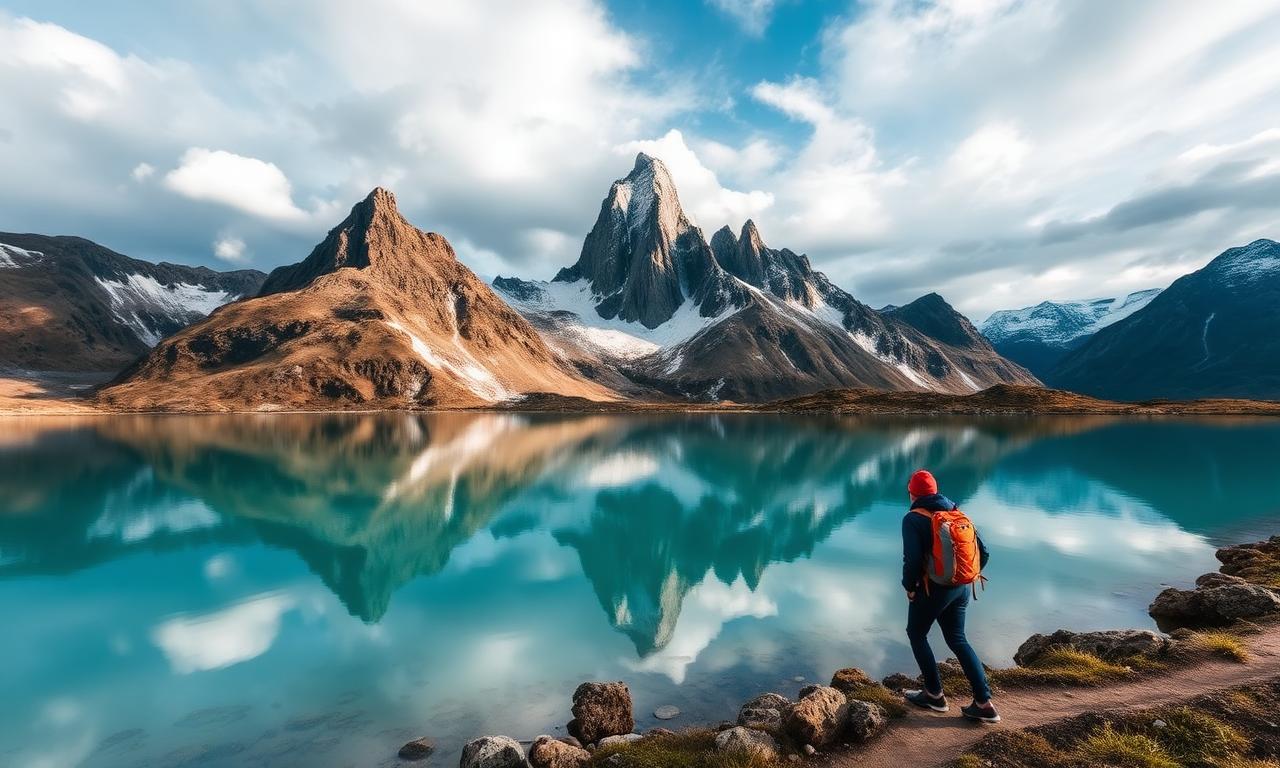
The W Trek is a 60-70 km route (depending on which side trips you do) through the park's most dramatic terrain. It gets its name from the rough shape of the route — three valleys leading up to the granite Torres themselves, then back along the lake to a final valley.
Most people do it in 4-5 days, hiking 12-20 km per day with overnight stays at refugios (mountain huts) or campsites along the route. Difficulty is moderate — long days, some elevation gain, but no technical terrain. If you've done multi-day hikes before, you can do this one.
§Booking — The Single Hardest Part
The W Trek can only be done if you've pre-booked your accommodation at each stop. This is rigidly enforced. You cannot show up and find a bed.
Two operators run the refugios: Vertice Patagonia and Las Torres Patagonia. You'll need to book separately on both sites depending on which campsites you're using. Book six months in advance for the December-February high season; four months out is the bare minimum and you'll have very limited choices by then.
Camping is significantly cheaper than the dormitory bunks — about $15-25 per person per night for a pitch, versus $90-150 for a dorm bed. Both options are equally good for the actual hike; the choice depends on your tolerance for sleeping in a tent in Patagonian weather.
§The Five-Day Route I'd Recommend (East to West)
Day 1: bus from Puerto Natales to the park, hike up to the base of the Torres (the famous three granite towers). Sleep at Chileno or El Refugio Torres. About 19 km return.
Day 2: hike down from the towers and along Lago Nordenskjöld to Cuernos refugio or Los Cuernos campsite. About 11 km, easier than day one.
Day 3: short hike to Frances campsite, then up Valle del Francés in the afternoon if the weather is clear. About 12 km total. The viewpoint at the top of the French Valley is the trip's most underrated moment.
Day 4: long day to Paine Grande and then on to Refugio Grey, with a side trip out to the Grey Glacier viewpoint. About 19 km.
Day 5: hike out from Grey along the lake to the catamaran pickup point. About 11 km. Boat across, bus back to Puerto Natales.
§Gear That Actually Mattered
A real waterproof shell. Patagonia weather is famously unstable — you can get all four seasons in an afternoon. A cheap rain poncho will not survive the wind.
Trekking poles. The trail surface is rough and there's real elevation. Poles save your knees on the long descents.
Layers, not bulk. Merino base layers, a fleece mid, the shell on top. You'll be too hot inside two hours and too cold inside the next hour. Layering matters.
Cash for the refugios — Chilean pesos, ideally — for beer, snacks, and the occasional cooked meal if you don't want to use your camp stove.
§Total Cost Breakdown
Park entry: about $45 USD for the full hike.
Accommodation (camping): about $90 for all four nights.
Catamaran: $40.
Buses from Puerto Natales: $25 round trip.
Food (carried in plus a couple of refugio meals): $90.
Total: under $300 USD per person, not counting your flight to Punta Arenas or your nights in Puerto Natales before and after.
§Who This Guide Is For
If you've been bookmarking everything about this trip and still feel unsure whether it's right for you, this is the gut-check. "Patagonia on a Budget: Hiking the W Trek Independently" suits curious travelers who'd rather have one perfect, unhurried day than five rushed ones — and who don't mind trading a little comfort for a real sense of place.
You don't need to be ultra-experienced. You don't need a huge budget. What helps most is a flexible attitude, comfortable shoes, and the willingness to ask a local for a tip instead of trusting the first thing a search result tells you. Almost everything below comes from making the small mistakes first, so you don't have to.
If you're traveling with someone else, share this article ahead of time. The trips that go best are the ones where both people show up with roughly the same expectations — the same pace, the same idea of 'enough,' and a shared sense of what 'a good day' actually looks like.
§When To Go and What To Expect
The single biggest factor in how much you enjoy this trip is timing. Shoulder seasons — broadly late spring and early autumn — give you mild weather, smaller crowds, and noticeably better prices on accommodation. Peak summer can be beautiful, but you'll pay a premium and share every viewpoint with a tour group. Winter has its own quiet magic, but check opening hours carefully because smaller places close.
Weather changes the experience more than people expect. A cloudy morning that would feel gloomy at home can turn a cobblestone street into the most photogenic version of itself. Pack a light layer even when the forecast says you won't need one, and accept that one rainy afternoon doesn't ruin a trip — it slows it down in a way you'll later be grateful for.
Crowd patterns matter too. The classic rule still works: arrive at the famous places before 9 a.m. or after 5 p.m., and spend the middle of the day somewhere that locals actually use. You'll see the same icons everyone else sees, just with breathing room around them. The photos you take at off-hours will also be the ones you actually print.
§What To Pack and Prepare
Travel light. Almost every regret on this kind of trip starts with a suitcase that was too big to carry up one flight of stairs. A 40-litre carry-on, a small day bag, and two pairs of shoes (one of them genuinely broken-in for walking) will cover almost everything you actually need.
Bring layers rather than bulky single pieces — a merino tee, a long-sleeve, a light shell, and one warmer mid-layer adapt to almost any forecast. Add a refillable water bottle, a universal adapter, a basic medicine kit (ibuprofen, electrolytes, blister plasters), and a small power bank for long days out. A laundry-detergent sheet pack weighs nothing and saves a full change of clothes.
On the admin side: download offline maps before you leave, screenshot booking confirmations, store a photo of your passport in a separate place, and tell your bank you're traveling. Set up an eSIM the night before departure so you land with working data — it removes the most stressful 30 minutes of any trip and lets you focus on getting your bearings, not on hunting for Wi-Fi.
§A Realistic Budget Breakdown
Budgets are personal, but rough ranges help you plan. A comfortable mid-range version of this trip usually means a small, well-reviewed hotel or apartment, one nice sit-down meal a day, and a couple of paid activities. Expect somewhere between $130 and $220 per person per day in most regions covered here, with major cities on the higher end and rural areas significantly lower.
Budget travelers can comfortably halve that by mixing hostels or guesthouses, cooking simple breakfasts, using public transport, and choosing free walking tours over paid group tours. Luxury travelers can easily double it without trying. None of these versions is 'better' — they're just different trips, and they all photograph the same.
The categories that quietly drain budgets are airport transfers, mid-trip laundry, baggage fees on cheap flights, and snack-spending at tourist sites. Plan for those four in advance and you'll come home much closer to your target number than most travelers do. A loose 10 percent buffer for the surprises is also healthy.
§Common Mistakes To Avoid
The first mistake is overbooking. A schedule with two highlights per day and an open evening almost always feels better than one with five must-sees and no breathing room. Leave space for the small accidental moments — a bakery you wander into, a park bench you sit on for an hour, a street musician who turns out to be unforgettable — because those are usually what you'll actually remember a year later.
The second is over-relying on the same five viral spots everyone else is photographing. They're popular for a reason, but they're rarely the best version of a place. For each famous site on your list, add one less-obvious alternative recommended by someone who actually lives nearby — a neighborhood bakery, a quieter viewpoint, a smaller museum.
The third is forgetting that travel is physically tiring. Hydrate more than you think you need to, get to bed at a reasonable hour at least every other night, and don't be a hero on day three. The best trips are paced like a steady walk, not a sprint. Even seasoned travelers underestimate how much energy a single day of new sights, new food, and new walking patterns burns.
§Frequently Asked Questions
Is it safe for solo travelers? Generally yes, with the same common-sense precautions you'd take in any unfamiliar city — share your itinerary with someone at home, keep an eye on your bag in crowded transit hubs, and trust your instincts about which streets and bars feel right at night.
Do I need to speak the local language? No, but learning even ten polite phrases — hello, please, thank you, sorry, the bill please — changes how people respond to you, and that changes the trip. A translation app handles the rest, and most younger people in tourism roles speak at least some English.
How far in advance should I book? For accommodation in popular places, six to ten weeks ahead is usually the sweet spot. For flights, set price alerts as soon as your dates are firm. For restaurants worth a detour, book the second your dates are confirmed — the best small places fill up first.
Can I do this with kids? Most of it, yes, with slower mornings and earlier dinners. Cut your planned daily activities in half, build in pool or park time, and let each kid choose one thing each day. You'll all enjoy it more, and the photos will be calmer too.
What about travel insurance? Always worth it for anything more than a short domestic weekend. The cheapest plans cover the big stuff — medical, emergency evacuation, trip cancellation — for the price of a couple of restaurant meals.
§Final Thoughts
The version of this trip you'll remember in five years isn't going to be the one with the most checked boxes. It'll be the morning you got up early for no particular reason, the meal that surprised you, the conversation with a stranger that lasted an hour longer than it should have. Plan enough to feel grounded, and leave enough unplanned to be surprised.
If you take one thing from this guide, take this: trust the slower pace. The travelers who come home glowing aren't the ones who saw more — they're the ones who let themselves sink into wherever they were. Save this page, share it with whoever you're traveling with, and come back to it the week before you go.
Mira Halen
Founder & Lead Writer, Wanderlane
Mira is a slow-travel writer who has spent the last decade splitting her year between long, unhurried trips and a small flat in Lisbon. She writes the kind of guides she wishes existed when she first started traveling — honest, friendly, and detailed enough to actually use on the road.
- 10+ years on the road across 48 countries
- Former editor at two indie travel magazines
- Featured in National Geographic Traveler & Afar